

Accent walls. Once the crown jewel of early-2000s design, often executed in a shade best described as “bold burgundy decision.”
If you’ve ever painted one wall a dramatically different color and then stood back thinking, This is either genius or a mistake I’ll be fixing in six months, you’ve participated in the great accent wall experiment.
So where do accent walls stand today—especially in the refined, design-conscious homes of the East Coast?
Are they still chic… or quietly retired alongside sponge painting and faux Tuscan kitchens?
The answer, like most things in modern interiors, is: it depends—and it’s all in the execution.
First, What Does “Cohesive” Actually Mean?
Accent walls are not dead. They’ve simply evolved.
What’s out:
- One random wall painted a loud, unrelated color
- High-contrast “feature walls” with no connection to the rest of the room
- Designs that scream for attention instead of earning it
What’s in:
- Subtle contrast
- Architectural intention
- Rich materials and texture
- Cohesion with the overall design
In other words, accent walls have traded their megaphone for a well-tailored blazer. They’re still making a statement—just more quietly, and with significantly better taste.
Why Accent Walls Fell Out of Favor (and Deserved It)

Let’s be honest: accent walls got a bad reputation for a reason.
For years, they were used as a quick fix:
- Rooms felt bland → add a bold wall
- Furniture didn’t quite work → distract with color
- No clear design plan → pick a “fun” shade and hope for the best
The result? Spaces that felt disjointed rather than dynamic.
In high-end interiors—particularly in East Coast homes where architecture often already carries weight—this kind of visual interruption can feel unnecessary at best, chaotic at worst.
But when done with intention? That’s a different story.
The Modern Accent Wall: Less “Look at Me,” More “Of Course”

Today’s accent wall isn’t about contrast for contrast’s sake. It’s about enhancing the architecture and flow of a space.
Think:
- A deep, moody tone that anchors a room
- A textured surface that adds quiet dimension
- A material shift that feels natural, not forced
The goal is for someone to walk into the room and think:
This feels incredible,
—not,
Ah yes, the accent wall.
When an Accent Wall Actually Makes Sense
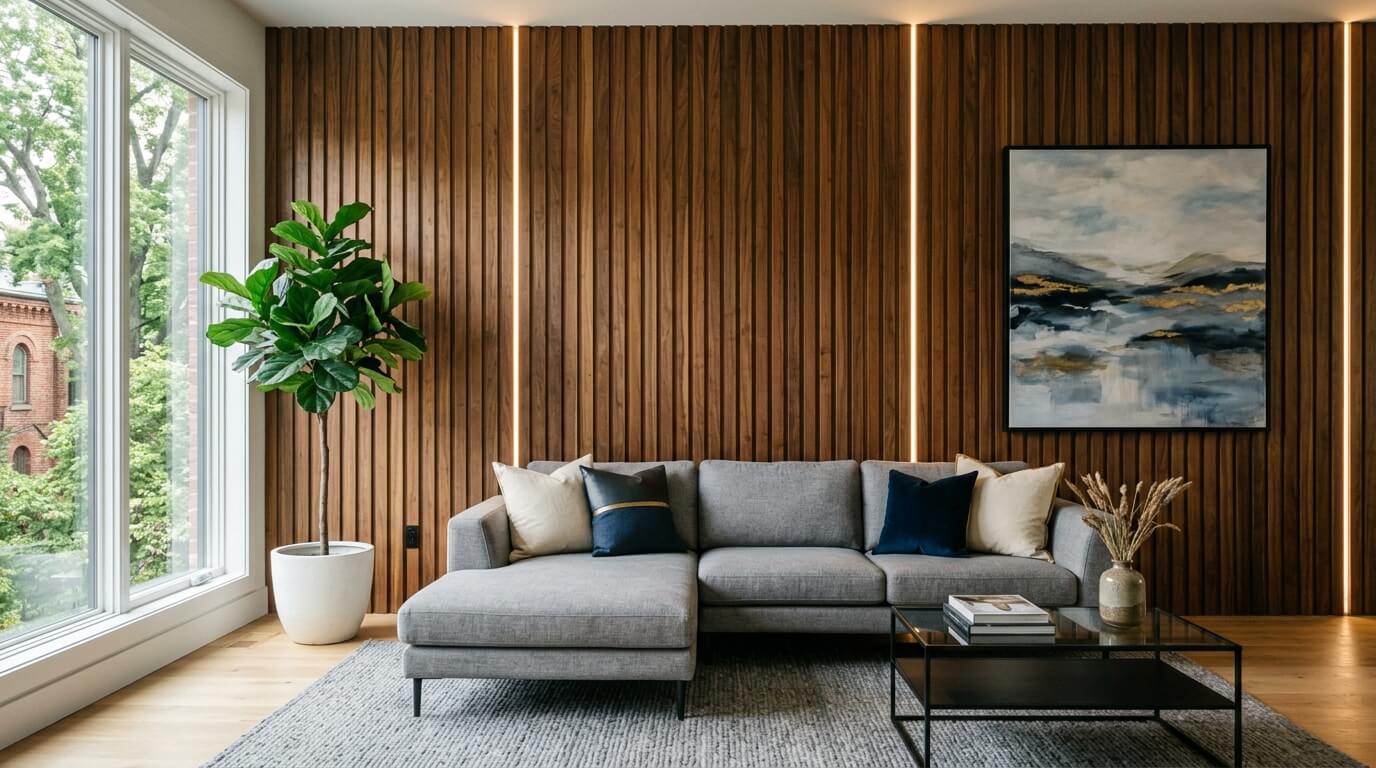
Not every room needs one. In fact, most don’t.
But when used strategically, accent walls can:
- Define a focal point
- Add depth to large or open spaces
- Highlight architectural features
- Create intimacy in otherwise expansive rooms
Ideal places for modern accent walls include:
- Behind a bed
- Around a fireplace
- In dining rooms where mood matters
- In home offices that need presence without distraction
In DC rowhomes, Baltimore townhouses, and Pennsylvania colonials—where room layouts can vary wildly—accent walls can help establish visual order without structural changes.
Color: Go Rich, Not Random

If you’re using paint, the key is choosing a color that feels intentional and grounded.
Modern accent wall colors tend to be:
- Deep navy
- Charcoal or soft black
- Forest green
- Warm taupe or mushroom
- Muted earth tones
These shades add drama without overwhelming the space.
What to avoid:
- Bright, high-saturation colors that feel disconnected
- Anything that doesn’t appear elsewhere in the room (even subtly)
A good rule: your accent wall color should feel like it belongs to the same family as the rest of your palette—even if it’s the more interesting sibling..
Texture Is the New Color

If modern design has taught us anything, it’s that texture often outperforms color.
Some of the most sophisticated accent walls today rely less on paint and more on material.
Consider:
- Wood paneling (vertical slats, fluted designs, or classic millwork)
- Limewash or plaster finishes
- Grasscloth or textured wallpaper
- Stone or tile (especially around fireplaces)
These approaches add depth and richness without relying on stark contrast. They also photograph beautifully—which, let’s be honest, matters.
Wallpaper: The Sophisticated Comeback

Wallpaper has re-entered the chat—and it’s no longer your grandmother’s floral overload.
Used as an accent wall, modern wallpaper can:
- Introduce pattern without overwhelming the room
- Add softness or drama, depending on the design
- Create a focal point that feels curated, not chaotic
For a high-end look:
- Stick to refined patterns (geometric, abstract, or subtle organic motifs)
- Keep the color palette cohesive
- Pair with simple furnishings to let the wall breathe
In smaller DC apartments or Baltimore rowhomes, wallpaper accent walls can deliver impact without requiring a full-room commitment.
Architecture First, Accent Second
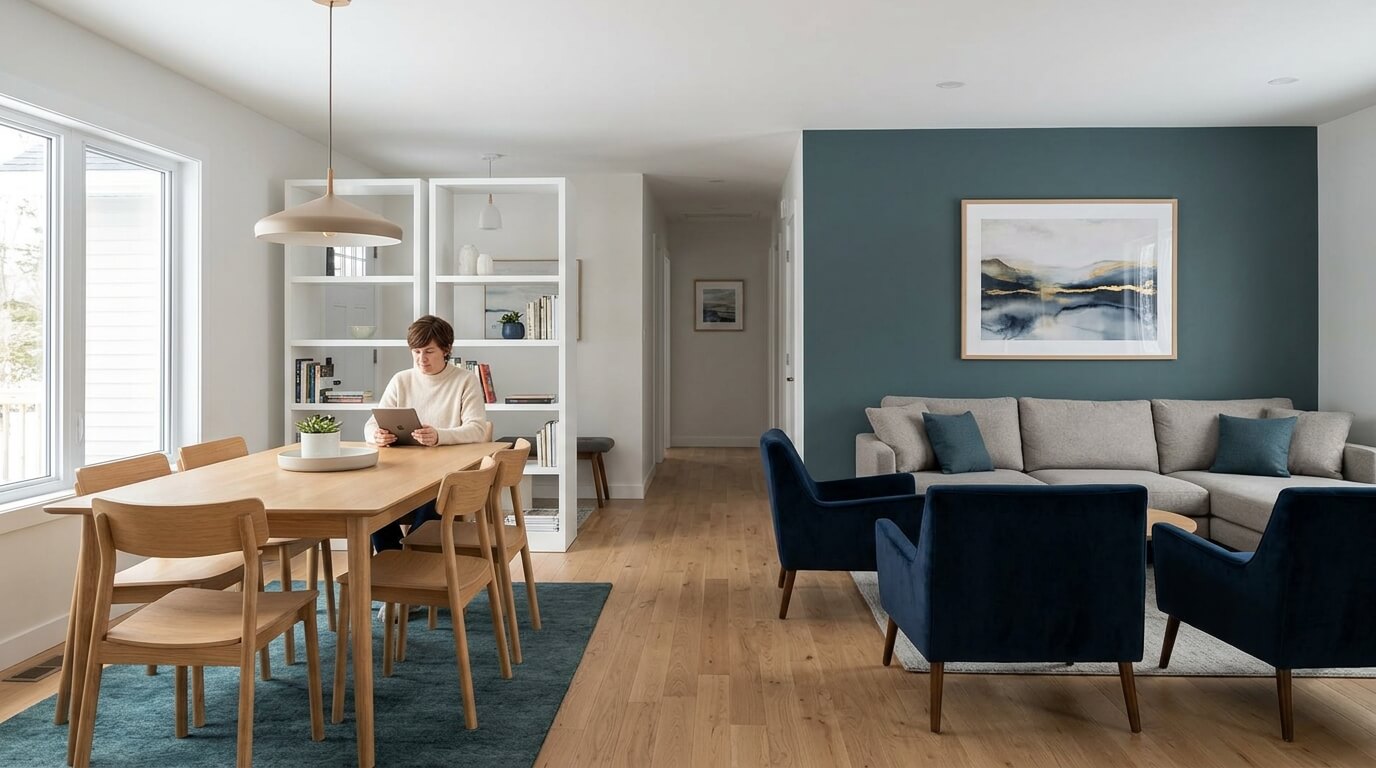
The most successful accent walls feel like they were always meant to be there.
Before adding one, ask:
- Does this wall already have a natural focal point?
- Am I highlighting something—or compensating for something?
If your space has:
- Crown molding
- Built-ins
- Fireplaces
- Large windows
You may not need an accent wall at all. The architecture is already doing the work.
But if you’re working with a blank box? That’s where a thoughtful accent can elevate the entire room.
Cohesion Is Non-Negotiable

Here’s where many accent walls still go wrong: they ignore the rest of the home.
In modern interiors—especially in open floor plans or smaller East Coast homes—flow matters.
Your accent wall should:
- Relate to adjacent spaces
- Echo materials or colors used elsewhere
- Feel like part of a larger design story
If your living room features a dramatic black accent wall, but your dining room is all soft neutrals with no connection, the transition can feel abrupt.
Think of your home as a conversation, not a series of unrelated statements.
When to Skip It Entirely

Sometimes, the most sophisticated choice is restraint.
Skip the accent wall if:
- The room already feels busy
- You’re relying on it to “fix” a layout or furniture issue
- The space is too small for contrast to feel intentional
- You prefer a calm, minimalist aesthetic
In many high-end interiors, especially those leaning modern or transitional, uniform walls create a sense of serenity and continuity that accent walls simply can’t match.
And serenity, as it turns out, is very on-brand for people with back-to-back meetings.
The Final Test: Does It Feel Elevated?
Before committing, step back and ask:
- Does this feel timeless or trendy?
- Does it enhance the room—or dominate it?
- Would I still love this in five years?
If the answer is yes, proceed confidently.
If not, remember: paint is forgiving, but your time and energy are not.
Accent walls are no longer about bold gestures—they’re about refined intention.
When done well, they:
- Add depth without clutter
- Create focus without distraction
- Elevate a space without overwhelming it
Because in the end, the best interiors don’t shout. They simply—and confidently—speak for themselves.
Interested in this update to your home? Hudson & Crane can elevate your home design today.
Hudson & Crane is an interior designer in Washington, D.C. serving residential clients in D.C., Maryland, and Northern Virginia.