
If you’ve ever stood in the doorway of your living room, coffee in hand, wondering how it somehow feels like a West Elm catalog collided with your college apartment… you’re not alone.
Achieving a cohesive aesthetic across multiple rooms is one of those goals that sounds simple—until you realize your home currently features industrial lighting, farmhouse signs, mid-century chairs, and a rogue coastal bathroom that “felt right at the time.” Welcome to adulthood on the East Coast, where our homes often reflect busy careers, inherited furniture, and a deep respect for practicality.
The good news? Creating a cohesive, intentional home doesn’t require hiring a designer, gutting your rowhouse, or throwing out everything you own. With a little strategy (and a sense of humor), you can bring visual harmony to your space—whether you’re in a DC condo, a Baltimore townhome, or a Pennsylvania colonial with history and questionable outlets. Let’s break it down.
First, What Does “Cohesive” Actually Mean?
Before we go any further, let’s clarify something important: cohesive does not mean boring.
A cohesive home:
- Feels intentional, not accidental
- Flows naturally from room to room
- Reflects your personality—not a showroom
- Allows variety without chaos
Think of it like a well-edited outfit. You can mix textures, colors, and styles, but there’s still a clear point of view. Your home should feel the same way—like everything belongs, even if it’s not matchy-matchy.
Start With a Whole-Home Vision (Yes, Even If You Decorate Room by Room)

The first rule of bold color is deceptively simple: start small. Think accent chairs, throw pillows, or a statement vase. In a city like DC, where your home may be as historic as your collection of congressional memoirs, a single daring piece of furniture can make a room feel curated rather than chaotic.
Take a cobalt-blue velvet chair in a neutral living room, for instance. It’s bold, it’s daring, and it doesn’t scream, “I’m in love with every Pantone color.” The chair becomes a conversation starter, an Instagram-worthy corner, and—if you’re like us—a fantastic place to sit dramatically while pretending to read The New Yorker.
Pick a Core Color Palette (Then Let It Breathe)

You do not need the same paint color in every room. (Please don’t do that.)
What you do need is a consistent color story.
A strong approach:
- 1–2 neutral base colors (think warm white, soft gray, greige, or taupe)
- 2–3 complementary accent colors
- 1 grounding tone (black, navy, deep green, or charcoal)
These colors don’t have to appear everywhere, but they should recur throughout the home in different forms—paint, textiles, artwork, or accessories.
Example:
- Living room: neutral walls, navy sofa, brass accents
- Bedroom: neutral walls, navy throw pillows, warm wood tones
- Kitchen: white cabinets, brass hardware, navy bar stools
Same family, different expressions. Like siblings who all went to good schools but chose different careers.
Repeat Materials Like a Design Pro (or at Least Fake It)

One of the easiest ways to create cohesion is through material repetition.
Take note of finishes and textures you already have:
- Wood tones (warm oak? dark walnut?)
- Metals (brass, black, chrome, nickel)
- Textures (linen, leather, boucle, stone)
Then commit.
If your dining room has black metal accents, echo that in:
- Light fixtures
- Cabinet hardware
- Mirror frames
- Furniture legs
If you love warm wood, let it show up in multiple rooms—even if it’s in different forms.
This repetition works quietly in the background, telling the brain, “Yes, this all makes sense.”
Let Each Room Have Its Own Personality (Within Reason)
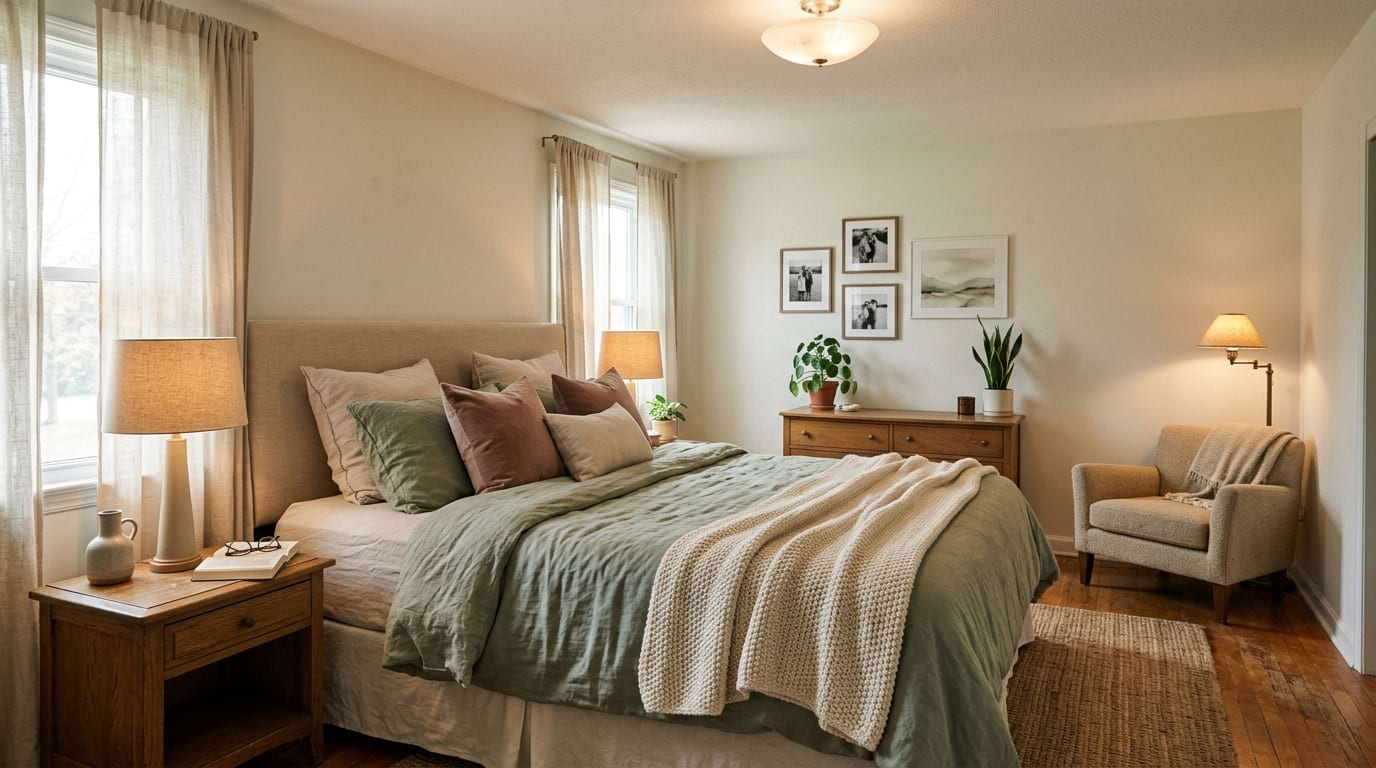
Cohesion doesn’t mean every room needs the same vibe. In fact, that’s how homes end up feeling flat.
Instead:
- Let rooms have distinct functions
- Use the same aesthetic language, but adjust the tone
For example:
- Living room: more structured, conversational, polished
- Bedroom: softer, calmer, more intimate
- Office: streamlined, focused, quietly confident
You can vary:
- Saturation of color
- Level of contrast
- Density of decor
Think of it like attending different meetings throughout the day—you’re still you, just in different modes.
Transition Spaces Are Your Secret Weapon
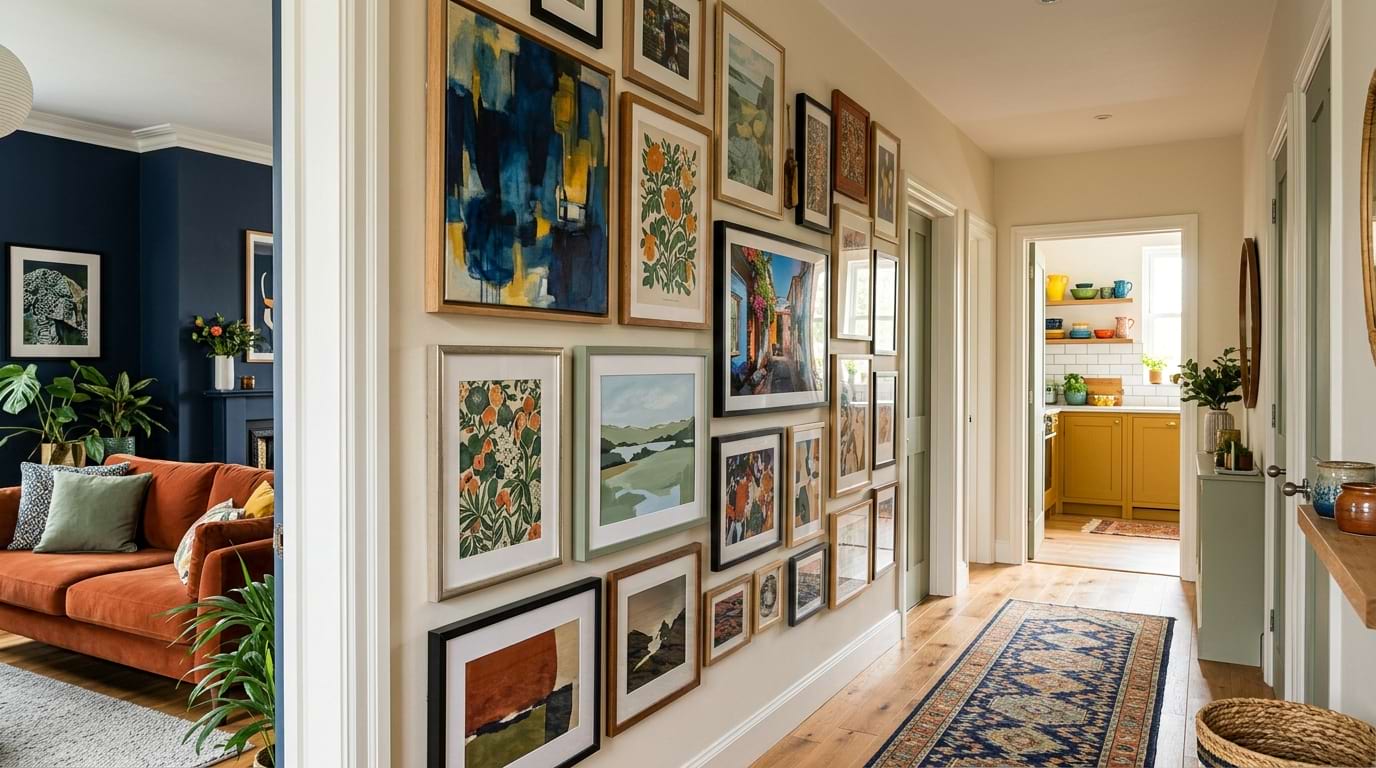
Hallways, staircases, entryways—these spaces do a lot of heavy lifting and get very little credit.
Use them to:
- Introduce colors that appear in adjacent rooms
- Repeat artwork styles or frame finishes
- Set the tone before entering a new space
A gallery wall in the hallway that pulls colors from multiple rooms can act like a visual handshake between spaces. A runner rug can bridge modern and traditional styles seamlessly.
In other words, don’t ignore the in-between. That’s where cohesion often lives.
Furniture: Similar Vibes, Not Identical Twins
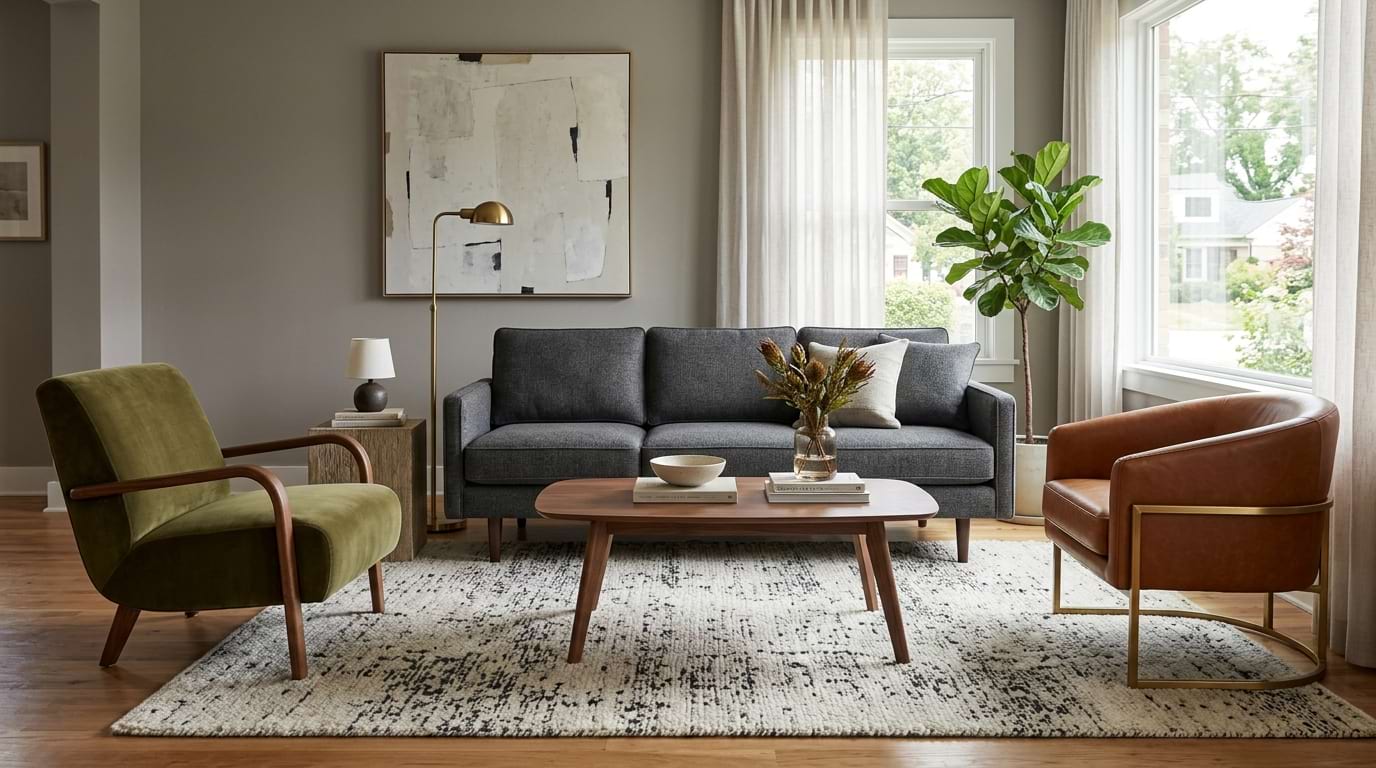
You don’t need matching furniture sets. (It’s not 2003, and we’re not furnishing a model home.)
What you do want is:
- Consistent scale (no tiny chair next to a massive sofa)
- Complementary silhouettes (clean-lined with clean-lined, curvy with curvy)
- A shared level of formality
If one room is ultra-modern and another is aggressively traditional, the transition can feel jarring. But modern-classic? Transitional? Contemporary with traditional elements? Those play nicely together.
When in doubt, ask: Would these pieces attend the same dinner party without awkwardness?
Art Is the Unifier (Even When Styles Differ)
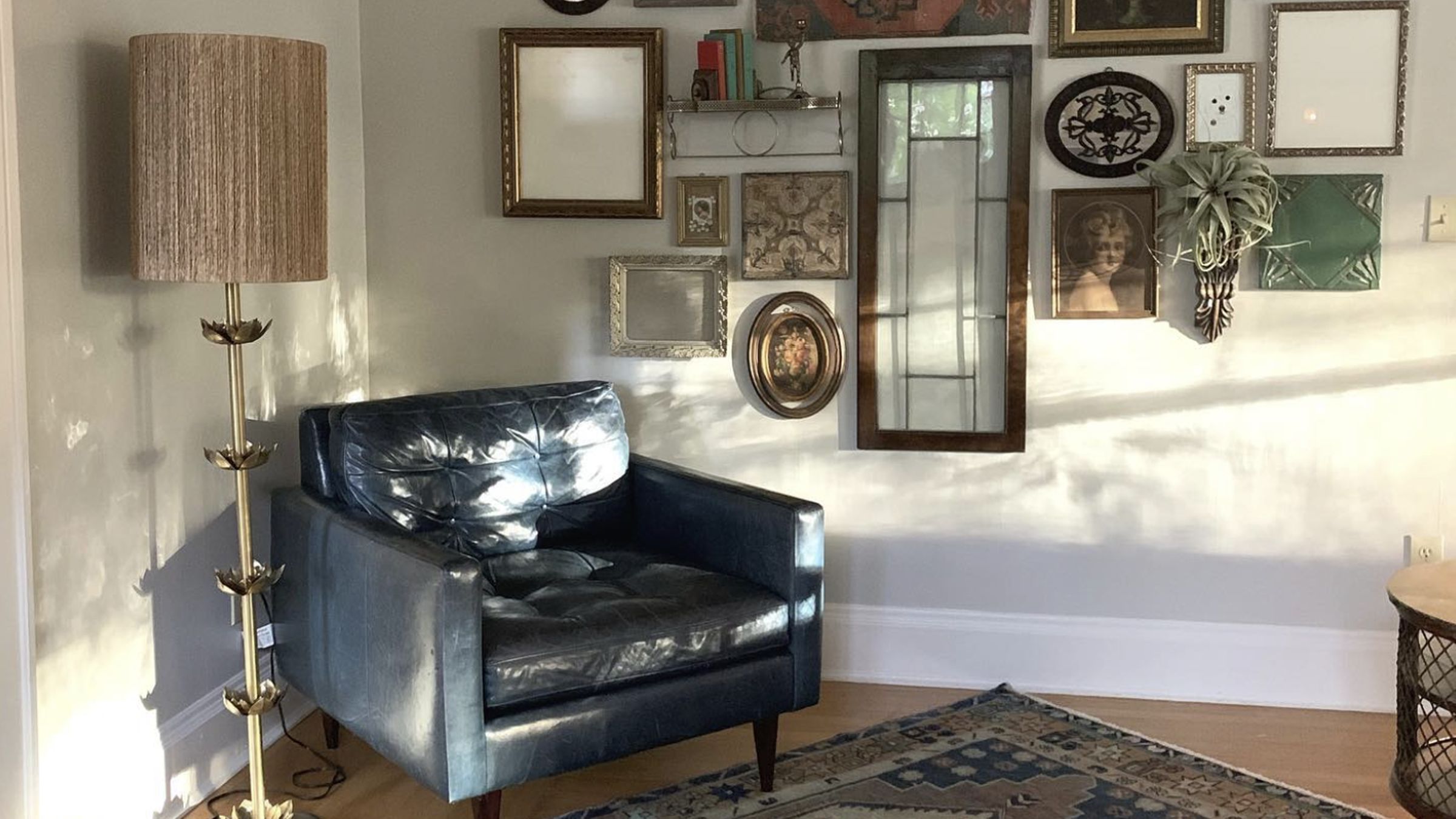
Art is one of the best tools for tying a home together—especially when your tastes are eclectic.
Ways to create cohesion with art:
- Use similar frame styles throughout the home
- Repeat colors or themes
- Keep scale consistent relative to wall size
You can absolutely mix:
- Photography and illustration
- Abstract and representational
- Old and new
Just give them a common thread. Frames, color palettes, or even subject matter can do the trick.
Accessories: Edit Ruthlessly
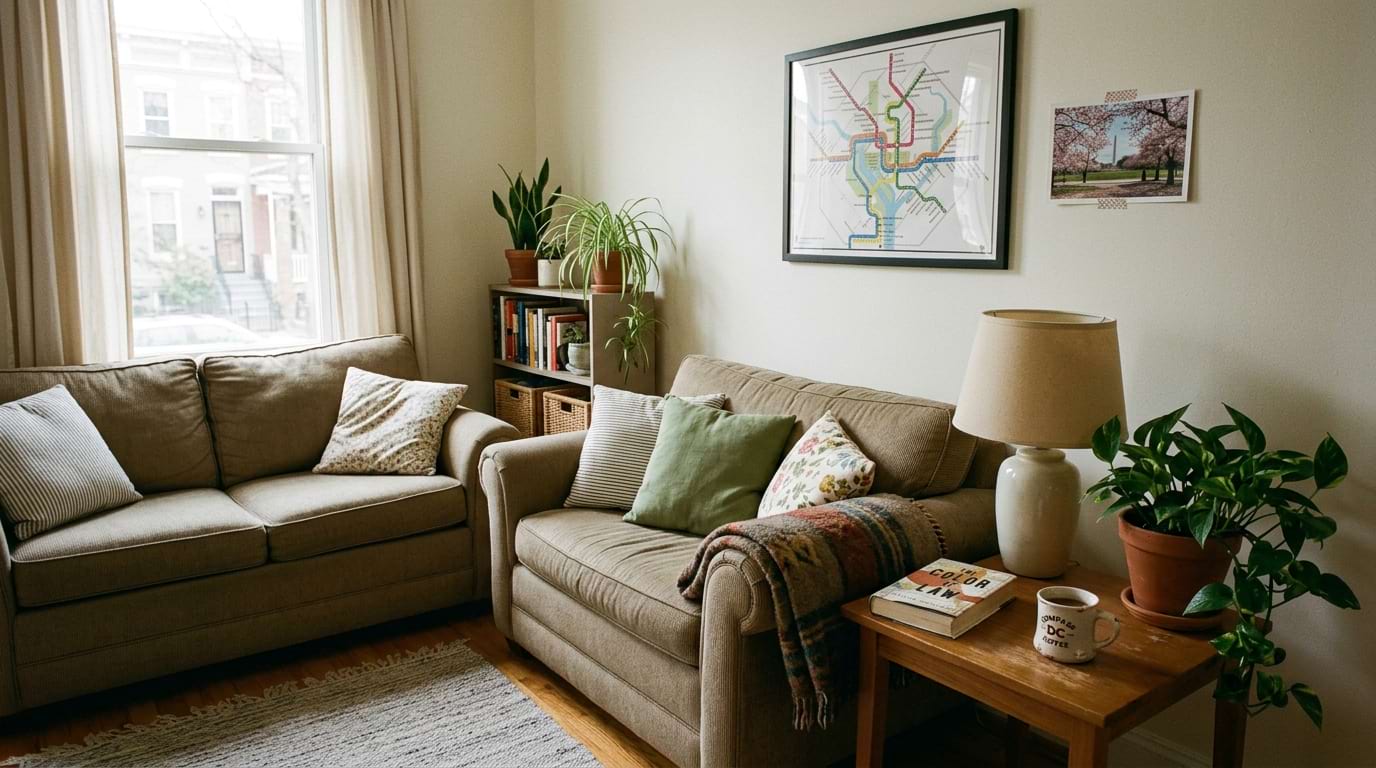
We’re all excellent collectors of things. Art, books, conference swag, travel souvenirs and gifts from well-meaning relatives.
Cohesion requires editing.
Try this:
- Group accessories by color or material
- Limit surfaces to a few intentional items
- Repeat similar objects in different rooms (vases, trays, books)
And remember: Negative space is not wasted space. It’s what makes everything else look better.
Lighting: The Unsung Hero of Cohesion
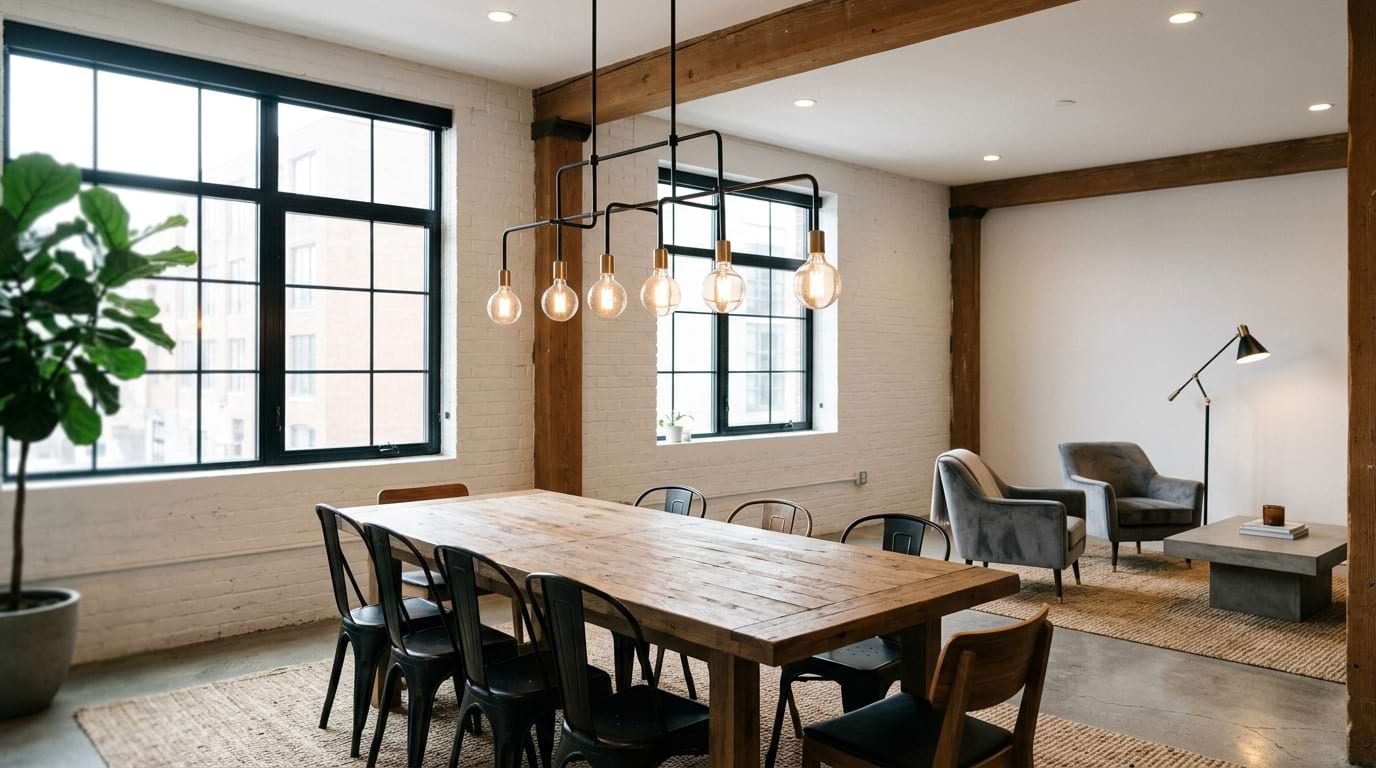
Lighting is often the last thing considered—and one of the first things that breaks a cohesive look.
Aim for:
- Similar metal finishes throughout the home
- Warm light temperatures (especially in living spaces)
- A mix of overhead, task, and ambient lighting
Even if fixtures differ in style, shared finishes and proportions help everything feel intentional.
A Home That Works as Hard as You Do
Achieving a cohesive aesthetic across multiple rooms isn’t about perfection—it’s about intention.
For busy professionals who still like to entertain – when necessary – your home should:
- Support your lifestyle
- Reflect your taste
- Feel welcoming, not stressful
When your space flows, your life tends to follow. And if a little humor, flexibility, and strategic throw pillows get you there? Even better.
Because at the end of the day, the most cohesive homes aren’t the ones that look perfect—they’re the ones that feel like home.
Let Hudson & Crane help you blend your tastes and find a healthy design balance in your home.
Hudson & Crane is an interior designer in Washington, D.C. serving residential clients in D.C., Maryland, and Northern Virginia.